Opening a practice
Optometry Business Plan: What Lenders Actually Want to See
 By Dr. Davinder Sidhu, OD
November 11, 2026 · 3 min read
A lot of first-time borrowers hand the bank a business plan and assume the financing package is done. When my first plan was turned down, that was part of my problem. A business plan explains the business, and a pro forma projects the money. If you only bring one, the underwriter has to guess at the other, and underwriters don't approve loans on guesses.
Here's what goes into a plan a lender can actually work with, in roughly the order they read it.
The ten sections
1. Executive summary. Write this last. In one page, say who you are, what you want to do, how much you need and how the loan gets paid back. Include the loan amount, total project cost, your own cash, year-3 revenue and profit, debt coverage and your lowest cash month.
2. The practice. Name, legal structure, address, opening or closing date, hours and services. Then give three specific reasons it will work. "There's no independent optometrist within five miles of 18,000 people" tells a lender far more than "there's strong demand for eye care."
3. You and your team. Lenders lend to people first. Show them you can run a business as well as see patients: management experience, billing knowledge, any clinic you helped grow. Add your staffing plan and the accountant and lawyer you'll work with.
4. Market and location. Use public data and say where each figure came from. Population, growth, income and age come from the national census, and you can count nearby optometrists through your licensing board's public lookup. List the competition and what you'll do differently. Resist the urge to overstate demand.
5. Services and how you get paid. Exams, contact lenses, medical eye care, optical and any specialty services, with how each one is paid: vision plans, medical insurance or private pay. Mention that insurance credentialing can take several months, and when you'll start it.
6. Marketing and patient growth. How you'll get from your first month's exams to a full schedule, and what that will cost. If you're buying, explain how you'll keep the seller's patients.
7. Operations. Exam lanes, square footage, equipment, software, hours, how many patients each doctor can see in a day, and your licences and insurance.
8. Funding request. A sources-and-uses table, the loan terms you're asking for and the collateral you can offer. If you're buying, explain how you arrived at the price.
9. Financial projections. A five-year summary, monthly cash flow for the first two years, your break-even point and a stress test. Every number in this section has to match your forecast exactly.
10. Risks. Lenders trust a plan more when you name the risks yourself. Cover a slower ramp-up, higher rates, staff turnover, cuts to insurance fees and what happens if you get sick. If you're buying, add patients leaving after the sale.
The numbers that carry the plan
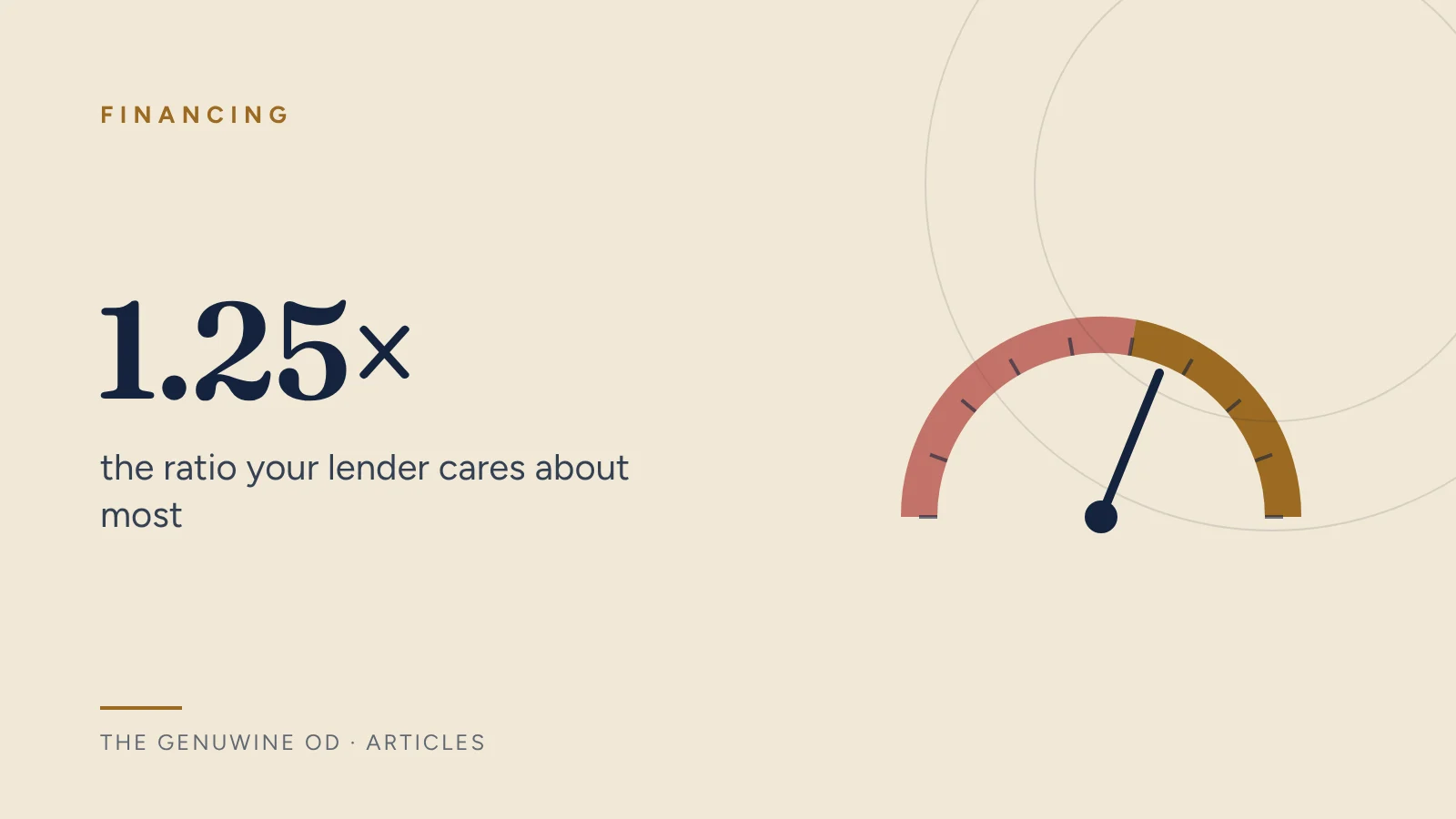
If your plan answers these clearly, you've answered most of what the lender is going to ask. What's your debt coverage in year 3? Many lenders want at least 1.25×, and my DSCR guide explains the math. What share of the project is your own cash? How low does your bank balance go, and in which month? How many exams a month do you need to break even, compared with what you're projecting? And what does coverage look like if revenue comes in 10% lower and the rate is 1% higher?
What gets plans rejected
The most common problem I see is numbers in the plan that don't match the forecast. Close behind are revenue figures with no assumptions under them (no exams per day, no fee, no capture rate), owner pay set to zero so the totals work, no working capital so cash runs out around month 7 or 8, and market claims with no source. A forty-page plan doesn't help either. Ten honest, specific pages will do more for you.
Then shop it around
Talk to several lenders, and start early. Banks compete for doctors' business, and I learned the hard way that one bank turning you down tells you very little about what the next one will say.
Common questions
How long should an optometry business plan be?
Aim for 8 to 12 pages before the appendix. Lenders skim. Short, specific and honest beats long and polished.
What is the difference between a business plan and a pro forma?
The business plan explains the business: who you are, where, why and how. The pro forma projects the money: what the clinic will collect, what it will cost and what's left for the loan and for you. Lenders want both, and the numbers must match.
Do I need a business plan to buy an existing practice?
Usually yes, though it can be shorter. It should explain how you'll keep the seller's patients, your transition plan, and how last year's cash flow supports the loan.
General education, not financial, lending, legal or tax advice. Numbers are examples and vary by location, practice type and situation. Confirm the rules with your lender, accountant and lawyer.
Keep reading

Optometry Practice Loans: How Lenders Decide (US and Canada)
What lenders check before they fund an optometry practice: debt coverage, your own cash, your lowest cash month, and how US and Canadian loans differ.
How Much Does It Cost to Open an Optometry Practice?
A line-by-line budget for opening an optometry practice: build-out, equipment, inventory, pre-opening costs and the working capital most new owners forget.
Debt Service Coverage Ratio (DSCR): Formula, Examples and What Lenders Want
The debt service coverage ratio formula explained with clinic examples: how to calculate DSCR, what a good ratio is, why 1.25x matters, and 6 ways to raise yours.