Financing
Optometry Practice Loans: How Lenders Decide (US and Canada)
 By Dr. Davinder Sidhu, OD
November 11, 2026 · 3 min read
My main bank turned down the business plan for my first clinic. I took it personally at the time. Looking back, the clinic was never the issue. I didn't know what the bank was actually checking, and I hadn't talked to anyone else.
Banks compete for doctors' business, so a no from one of them doesn't mean much on its own. You'll get a lot further, though, if you walk in already knowing the three numbers almost every lender looks at first.
Can the clinic pay the loan?
Lenders call this debt service coverage, or DSCR:
DSCR = cash available for loan payments ÷ yearly loan payments
Many want to see 1.25× or better, which means $1.25 of cash for every dollar of loan payments. At 1.0× the clinic is only just covering the loan with nothing left over, and below that it can't make the payments from its own cash.
A quick example: a $600,000 loan at 7% over 10 years costs about $83,600 a year. If the clinic has $103,000 left over for loan payments, that's about 1.23×, which is just short of what most lenders want. My DSCR guide goes into what counts as cash available and how to raise it.
How much of your own money is going in?
In the US, SBA 7(a) loans usually need at least 10% of the total project from you, for start-ups and for purchases. In Canada, some bank programs for professionals will finance up to 100%, although plenty of lenders still like to see some of your own money in the deal.
They'll also want to know where the money came from. Expect to show two or three months of bank statements, and if family is helping, a gift letter.
What's your lowest cash month?
New clinics ramp up slowly, while rent, staff and loan interest start right away. Somewhere in your first year your bank balance will hit its lowest point, and lenders want to see that it stays above zero.
The month that catches people is usually the one right after an interest-only period ends. In one fictional example I use, the monthly payment jumps from about $4,800 to about $7,600 in month 7, while exams are still climbing, and cash bottoms out in month 8. A lender who sees that you planned for that month trusts the rest of your numbers more.
What else ends up in the file
They'll look at you as a person: your licence, your experience, any management you've done, your personal credit and your personal debts, including student loans. They'll want a business plan and a five-year forecast with assumptions they can check. If you're buying, they'll want the seller's last three years of statements and tax returns. And most practice loans come with a personal guarantee, plus a request for life and disability insurance.
The US and Canada side by side
| United States | Canada | |
|---|---|---|
| Common loan | SBA 7(a), or a bank's own practice loan | A bank's professional or practice loan program |
| Your own cash | Usually 10% or more | Some programs finance up to 100% |
| Rate for planning | Often prime plus a spread (SBA caps it at prime + 3% on larger loans) | Often close to bank prime for professional programs |
| Term | Up to 10 years for a business purchase, longer with real estate | Often 10 years, varies by bank |
| Coverage | Often 1.25×; SBA purchases are tested on last year's actual cash flow | Varies, many banks look for about 1.25× |
Rates, terms and programs change all the time, so confirm everything with the lenders you talk to.
What I'd do differently the second time
I'd know my three numbers cold before the first meeting. I'd write down every assumption behind my revenue (exams per day, revenue per exam, optical capture rate and staffing) and where each one came from. I'd run a stress test showing what happens if revenue comes in 10% lower and the rate is 1% higher. And I'd talk to several lenders early, months before I needed the money.
Most of all, I'd bring a proper forecast. A pro forma is a projection of what the clinic will collect, what it will cost and what's left over for the loan and for you. It answers all three of the lender's questions in one document, which is exactly what my first business plan was missing.
Common questions
What do lenders look at for an optometry practice loan?
Your personal credit and debts, your experience as an optometrist, how much of your own cash goes in, and whether the business's cash flow covers the loan payments. For a purchase, the seller's past financial statements matter most.
Can I get 100% financing for an optometry practice?
Some Canadian bank programs for professionals finance up to 100% of a project. In the US, SBA loans usually require at least 10% of the project from the buyer.
What interest rate should I plan for?
Rates change. For planning, many ODs model a rate a few points above prime. In the US, SBA 7(a) rates for larger loans are capped at prime plus 3%.
General education, not financial, lending, legal or tax advice. Numbers are examples and vary by location, practice type and situation. Confirm the rules with your lender, accountant and lawyer.
Keep reading
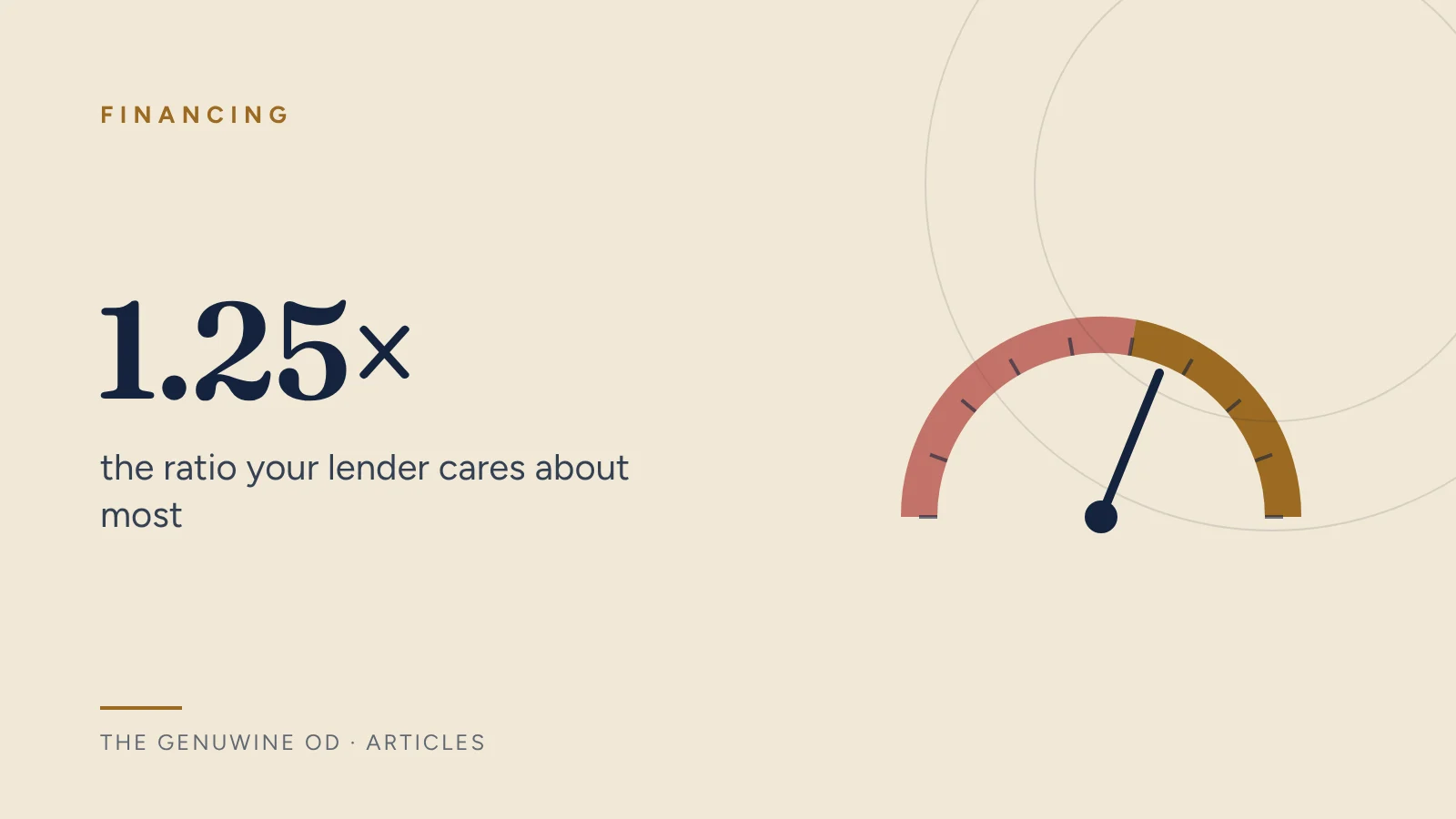
Debt Service Coverage Ratio (DSCR): Formula, Examples and What Lenders Want
The debt service coverage ratio formula explained with clinic examples: how to calculate DSCR, what a good ratio is, why 1.25x matters, and 6 ways to raise yours.
Optometry Business Plan: What Lenders Actually Want to See
How to write an optometry practice business plan a lender will fund: the 10 sections, the numbers that matter most, and the mistakes that get plans rejected.
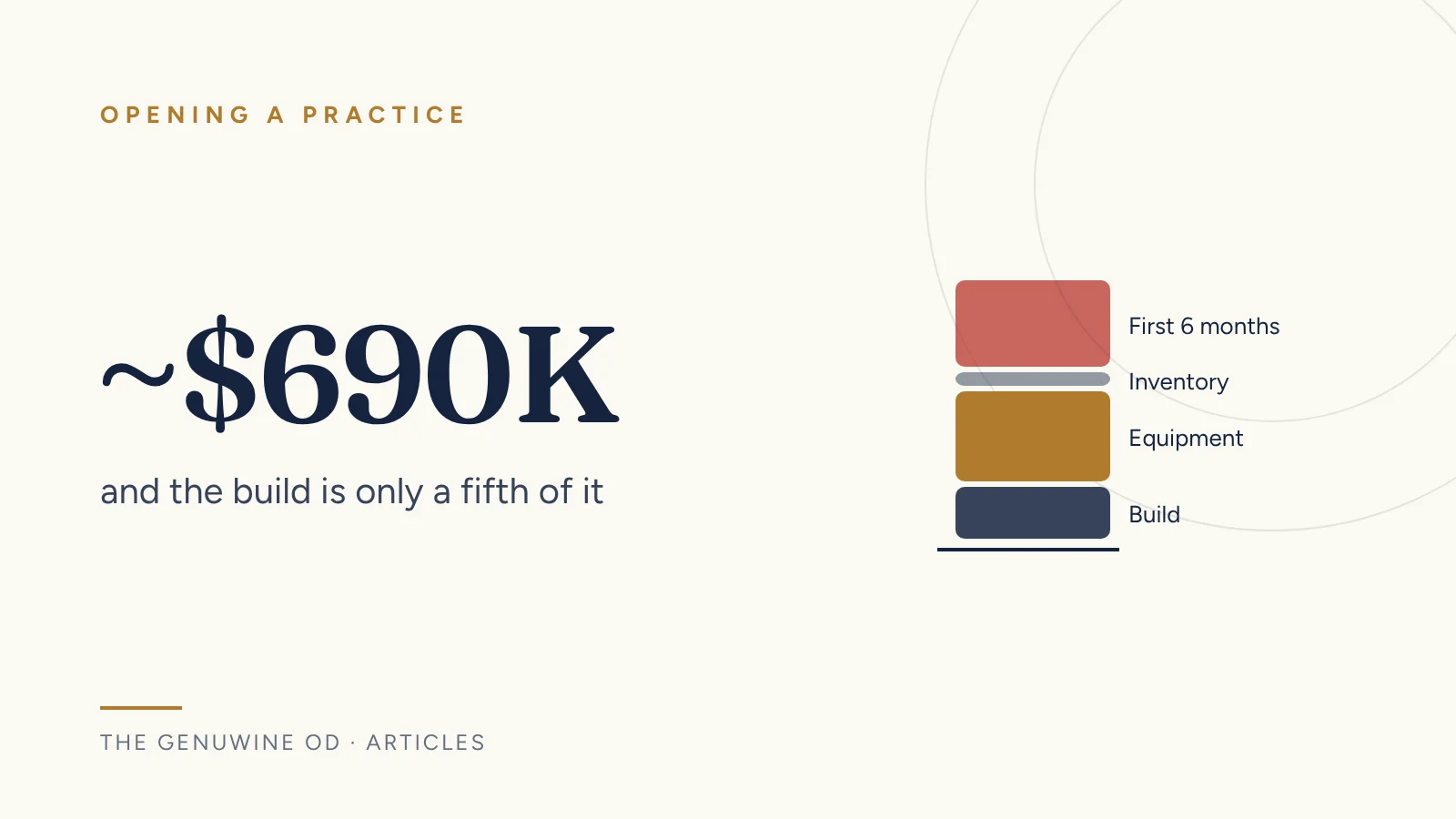
How Much Does It Cost to Open an Optometry Practice?
A line-by-line budget for opening an optometry practice: build-out, equipment, inventory, pre-opening costs and the working capital most new owners forget.