Financing
Using an SBA Loan to Buy an Optometry Practice: The October 2026 Rules
 By Dr. Davinder Sidhu, OD
November 11, 2026 · 3 min read
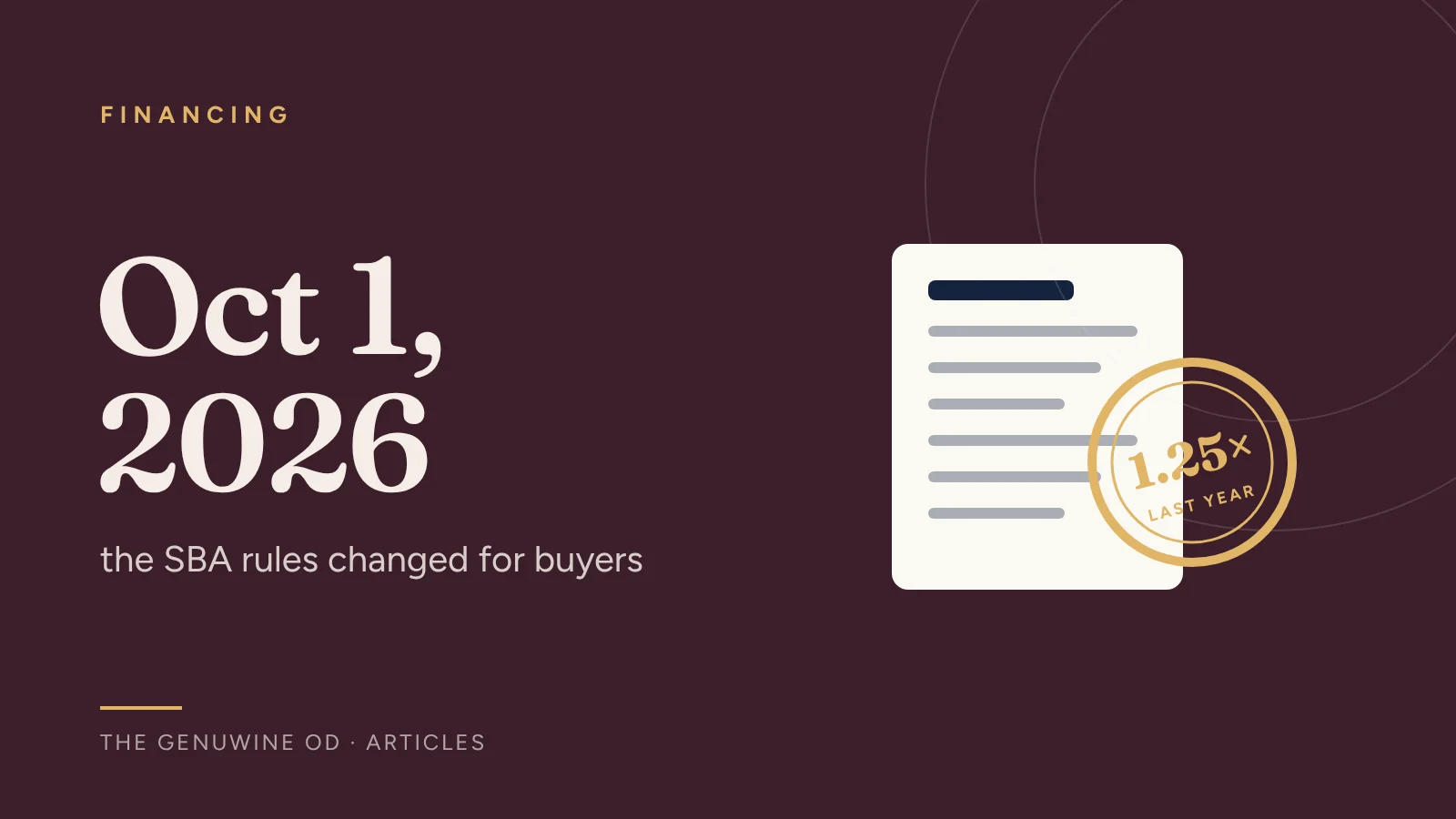
A lot of US optometrists buy their first practice with an SBA 7(a) loan. The rules changed on October 1, 2026, and the change hits hardest if your plan was to grow into the price after you take over.
Treat this as general education. SBA rules and individual lender policies shift, so check everything with an SBA lender before you make an offer.
Last year's numbers decide it now
When you buy a practice with a 7(a) loan, the lender now judges the price on the seller's actual cash flow from last year. Your projections, however good your plans are, can't make up a shortfall.
The test looks like this:
Last year's cash flow, after paying you a fair wage ÷ the new yearly loan payments ≥ 1.25
If you're opening a clinic from scratch, this doesn't apply in the same way. A start-up has no history, so lenders still work from your forecast.
How the test plays out
Say a fictional practice is listed at $1.1 million. After paying the new owner a fair doctor wage, last year's cash available for loan payments was $230,000. With 10% down, a 10% rate, a 10-year term, and closing costs and working capital rolled into the loan, the yearly payments come to about $187,000.
$230,000 ÷ $187,000 = 1.23×
That's close, but it fails. Something has to move before a lender can approve it. You can bring the price down to the point where coverage reaches 1.25×. You can put in more cash so the loan and the payments shrink. You can ask the seller to carry part of the price as a note on full standby, which I explain below. Or you can go back through the add-backs: one-time costs with paperwork behind them can raise last year's cash flow, and the ones without paperwork can't.
In practice, the highest price a lender will back often ends up being the real ceiling on the deal, more than the asking price or any rule of thumb.
The rest of the rules worth knowing
You'll need at least 10% of the project as equity. A seller note can count toward up to half of that, but only if it takes no payments for the full term of the SBA loan. The term for the business itself goes up to 10 years, and loans that include real estate can run longer. The seller can stay on as a consultant for up to 24 months, which helps with patient retention.
The SBA also caps the interest rate as a spread over prime. For loans above $350,000 the cap is prime plus 3%, so with prime at 7.00% in November 2026, that's up to 10.00%. 7(a) loans go up to $5 million.
What to bring to the lender
Bring the seller's last three years of business tax returns and financial statements, plus interim numbers for the current year, and the purchase agreement or letter of intent. For your side, you'll need your resume, your licence, a personal financial statement (SBA Form 413 or the lender's own version) and usually three years of personal tax returns. Add a business plan and a forecast showing how you'll run the practice after closing.
Run the test before the lender does
You can do this math yourself before you ever make an offer. You need last year's collections, net profit and owner pay from the seller's statements, a fair market wage for the doctor work in your area, and your expected loan amount, rate and term. From those you can work out the highest price that passes 1.25×, and then decide whether the asking price makes sense.
If you're in Canada
There's no SBA rule here. Each bank sets its own terms, and some professional programs finance up to 100%. Many still check that the practice's cash covers the loan by about 1.25×, so the advice is the same on both sides of the border: know the price a lender will back before you make your offer.
Common questions
Can I use an SBA loan to buy an optometry practice?
Yes. SBA 7(a) loans are one of the most common ways US optometrists buy a practice. The practice's past cash flow has to support the new loan, and you usually need at least 10% of the project in equity.
Does the SBA use my projections when I buy a practice?
Under the SBA rules effective October 1, 2026, a change of ownership is judged on the seller's historical cash flow. Your projections can't make up a shortfall. New start-ups are still judged on projections.
Can a seller note count as my down payment?
Under current SBA rules, a seller note can count toward up to half of the required equity only if it is on full standby, meaning it takes no payments, for the full term of the SBA loan.
General education, not financial, lending, legal or tax advice. Numbers are examples and vary by location, practice type and situation. Confirm the rules with your lender, accountant and lawyer.
Keep reading
Buying an Optometry Practice: A Step-by-Step Guide for ODs
How to buy an optometry practice for sale: what to check in the financials, how to value it, how lenders decide, and the red flags to catch before you sign.
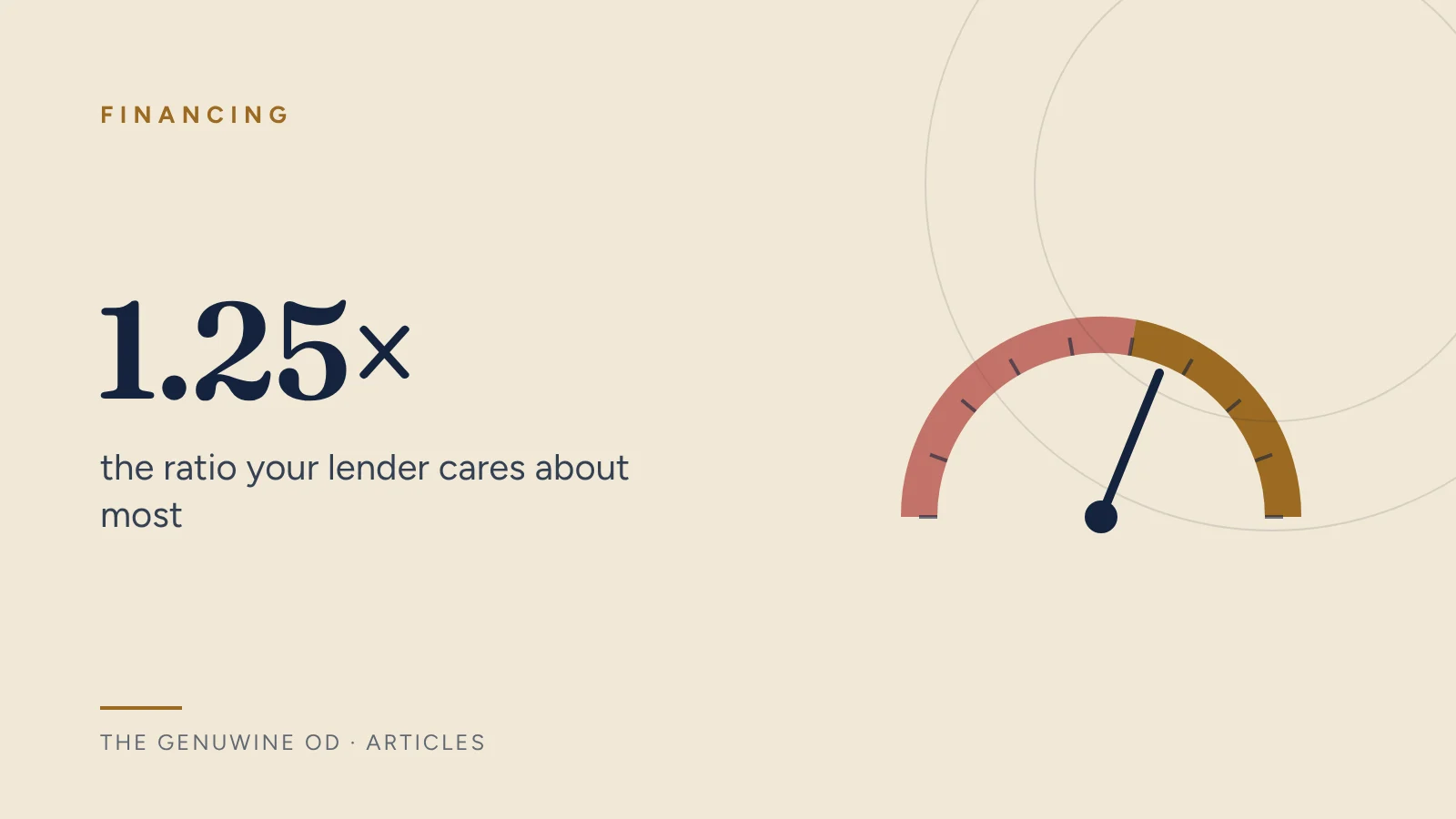
Debt Service Coverage Ratio (DSCR): Formula, Examples and What Lenders Want
The debt service coverage ratio formula explained with clinic examples: how to calculate DSCR, what a good ratio is, why 1.25x matters, and 6 ways to raise yours.
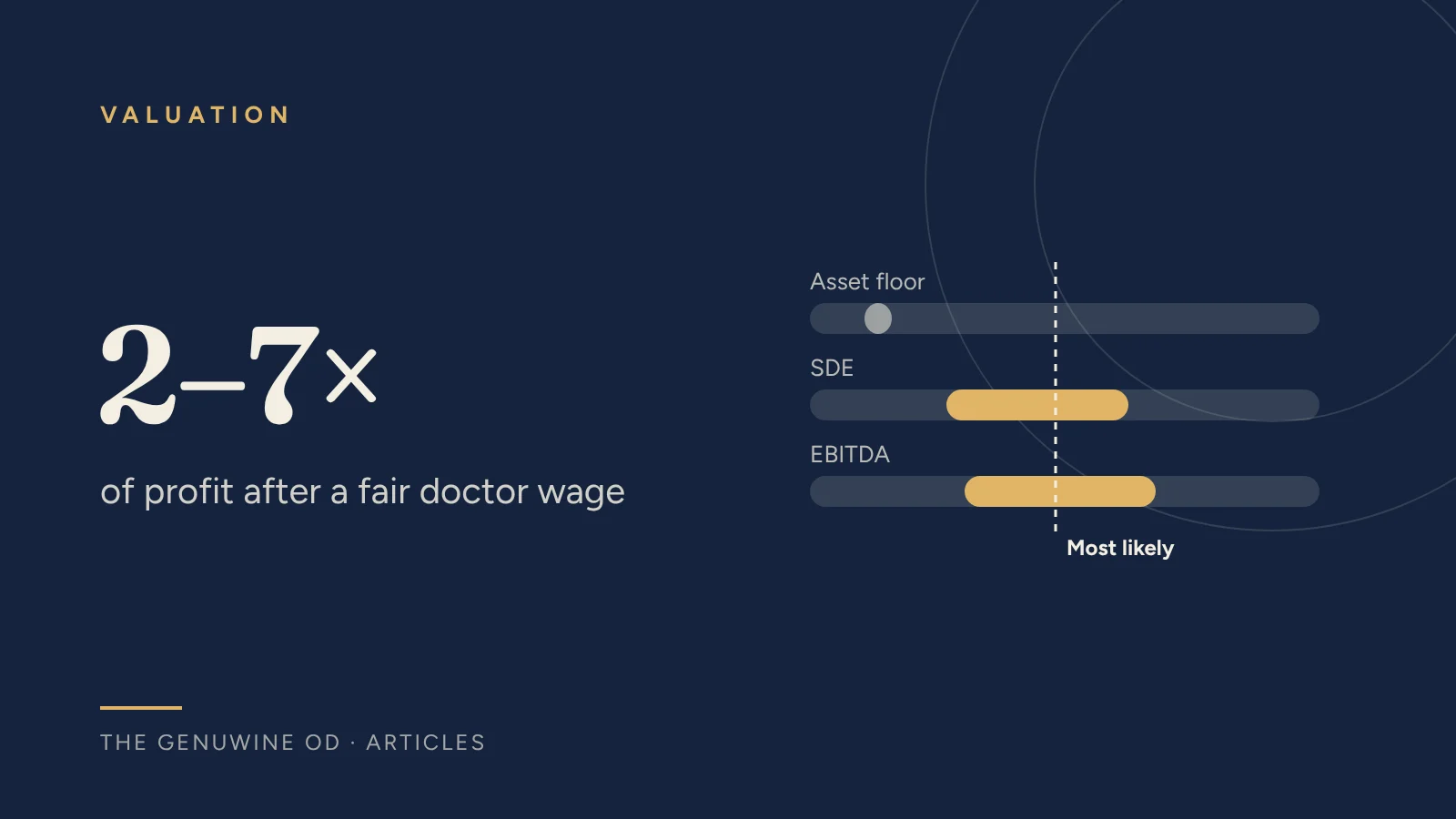
How Much Is an Optometry Practice Worth? The 3 Methods Buyers and Lenders Use
How optometry practices are valued: asset value, SDE and EBITDA multiples, why revenue rules of thumb mislead, and a worked example with real formulas.