Buying a practice
Buying an Optometry Practice: A Step-by-Step Guide for ODs
 By Dr. Davinder Sidhu, OD
November 11, 2026 · 4 min read
Buying an established practice can be faster and safer than opening one from nothing. You get patients, staff and cash flow on the first day. It's also very easy to overpay, because most buyers only ask what the practice is worth.
I'd ask a second question too: will this practice work once it's yours? That means your pay, the loan payments, the staff and the slow months, year by year. A fair price can still sink you. If you keep fewer patients than the seller had, profit drops, and the loan payment stays exactly the same.
Here's the order I'd go in.
1. Decide your limits before you look
Before you start scrolling listings, write down where you want to practice, roughly how big a clinic you can handle, how much cash you can put in and what you need to earn in your first year. Having those numbers on paper makes it much easier to walk away from the wrong practice, and most of the bad deals I've seen happened because the buyer fell for a clinic first and did the math second.
2. Ask for the right documents
Sign a confidentiality agreement first, because serious sellers expect one. Then ask for three years of accountant-prepared financial statements and business tax returns, along with reports from the practice management system: collections, exams per year, active patients, new patients and recalls. You'll also want the lease (years left, renewal options and whether it can be assigned to you), a staff list with roles, pay and years of service, and an equipment list with ages.
3. Check the numbers against each other
Compare what was collected, not what was billed, in the accountant's P&L and in the practice management reports. They should be close. If they don't match, ask why before you spend another dollar on lawyers or lenders.
Then look at the trend across all three years. Rising collections are a good sign. Flat or falling collections for two years or more need a good explanation.
I also check a few ratios as a percentage of collections. Non-doctor payroll often runs around 21 to 28%. Cost of goods (frames, lenses, contacts and lab) is often 26 to 32% or higher now. Rent and occupancy usually land around 5 to 8%. If the practice sits outside those ranges, it isn't automatically a problem, but you need to know the reason.
The ratio I watch most closely is owner dependence: the owner's exams divided by total exams. When the selling doctor does almost everything, a lot of the value can leave with them.
4. Value it yourself
Rebuild the profit from scratch. Net profit, plus the owner's pay, interest, depreciation and the add-backs that come with receipts, gives you SDE. Take out a fair market wage for the doctor work and you're left with the profit you're actually paying for. I walk through all three valuation methods with an example in how much an optometry practice is worth.
5. Test the price against the loan
This is the step most buyers skip, and it's often the one that decides the deal. Your lender wants to see that the practice's cash flow covers the loan payments with some room to spare, usually about 1.25 times.
In the US, many ODs buy with an SBA 7(a) loan. Under the SBA rules that took effect on October 1, 2026, a purchase is judged on the seller's actual cash flow from last year. Your projections can't fill a gap. If last year's numbers don't cover the new loan 1.25 times, something has to give: the price, the loan size or the cash you put in. I cover the details in SBA loans to buy an optometry practice. Canada has no SBA, but many banks look at coverage in a similar way.
6. Plan your first five years
Once the price works for the lender, make sure it works for you. Figure out what you'll pay yourself and when. Run the numbers again with only 85% or 90% of the seller's patients staying. Check what happens to your bank balance when any interest-only period ends, and when the bigger pieces of equipment will need replacing. A five-year forecast answers these questions before you sign, and most lenders will ask you for one anyway.
7. Negotiate the terms, not only the price
How long the seller stays, and in what role, can matter more than $50,000 on the price. Seller financing can reduce your bank loan, though under current SBA rules a seller note only counts toward your down payment if it takes no payments for the full loan term. Get the non-compete and non-solicit terms in writing, settle who keeps the receivables and the working capital, and know which staff are staying and on what terms.
The red flags I look for
These are the ones that make me slow down or walk away: P&L collections that don't match the practice management reports; collections that have been flat or falling for two years or more; a seller who does nearly all the exams and wants to leave right away; a short lease or a landlord who won't assign it; and large add-backs with nothing to back them up.
Build your team early
You'll want a lender who has done practice loans before, an accountant who works with healthcare businesses and a lawyer who has handled practice purchases. Bring all three in before you sign a letter of intent. It's much cheaper to fix a problem at that stage than after.
Common questions
How much money do I need to buy an optometry practice?
In the US under SBA rules, plan for about 10% of the total project from your own cash, plus closing costs and working capital. Some Canadian bank programs for professionals finance up to 100%. Your lender sets the final number.
What should I look at first when a practice is for sale?
Three years of accountant-prepared financial statements and the practice management system's collection reports. Collections should match between the two, and the trend matters more than any single year.
How long does it take to buy a practice?
Often three to six months from the first conversation to closing, depending on financing, due diligence and the lease.
General education, not financial, lending, legal or tax advice. Numbers are examples and vary by location, practice type and situation. Confirm the rules with your lender, accountant and lawyer.
Keep reading
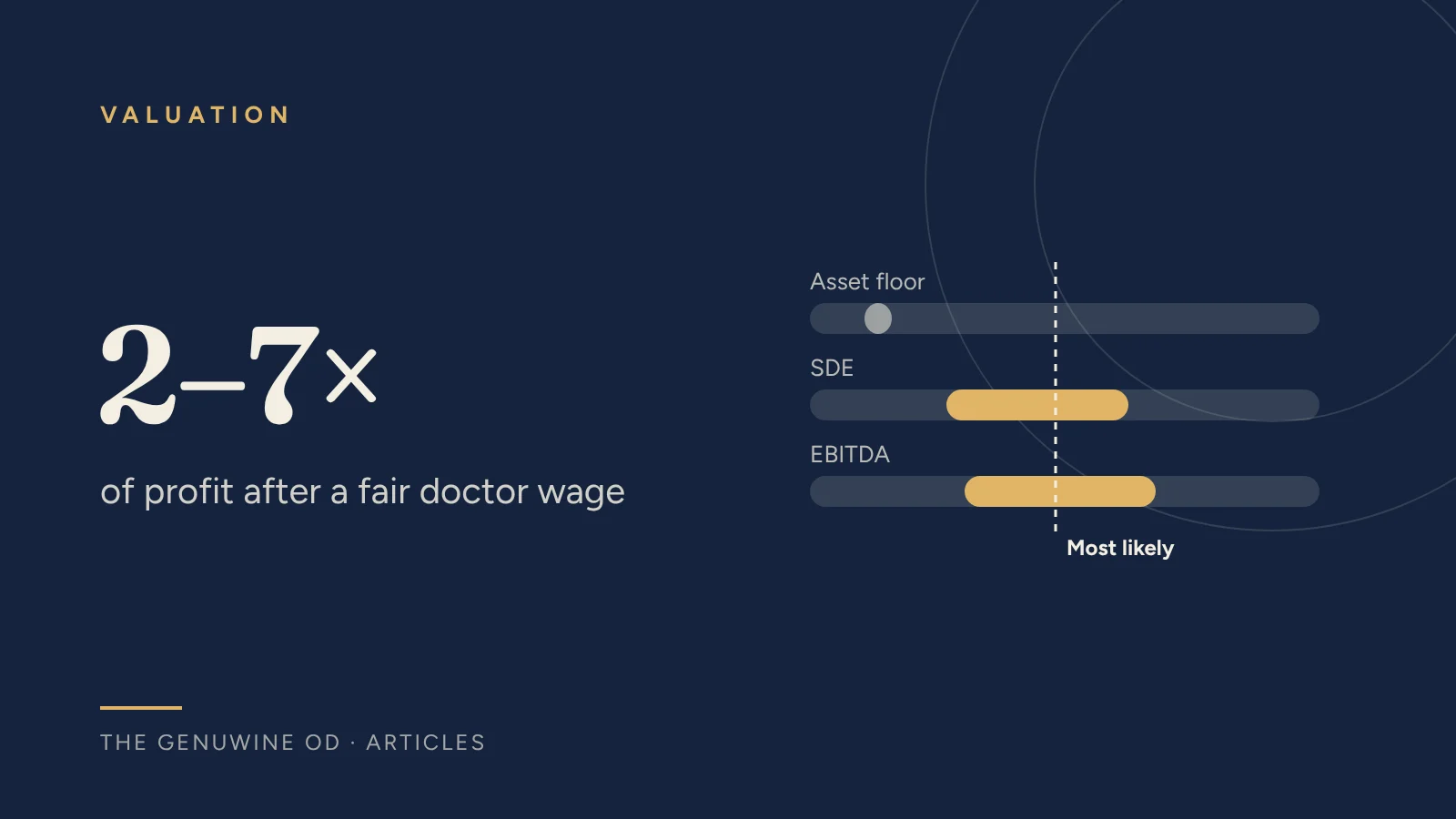
How Much Is an Optometry Practice Worth? The 3 Methods Buyers and Lenders Use
How optometry practices are valued: asset value, SDE and EBITDA multiples, why revenue rules of thumb mislead, and a worked example with real formulas.
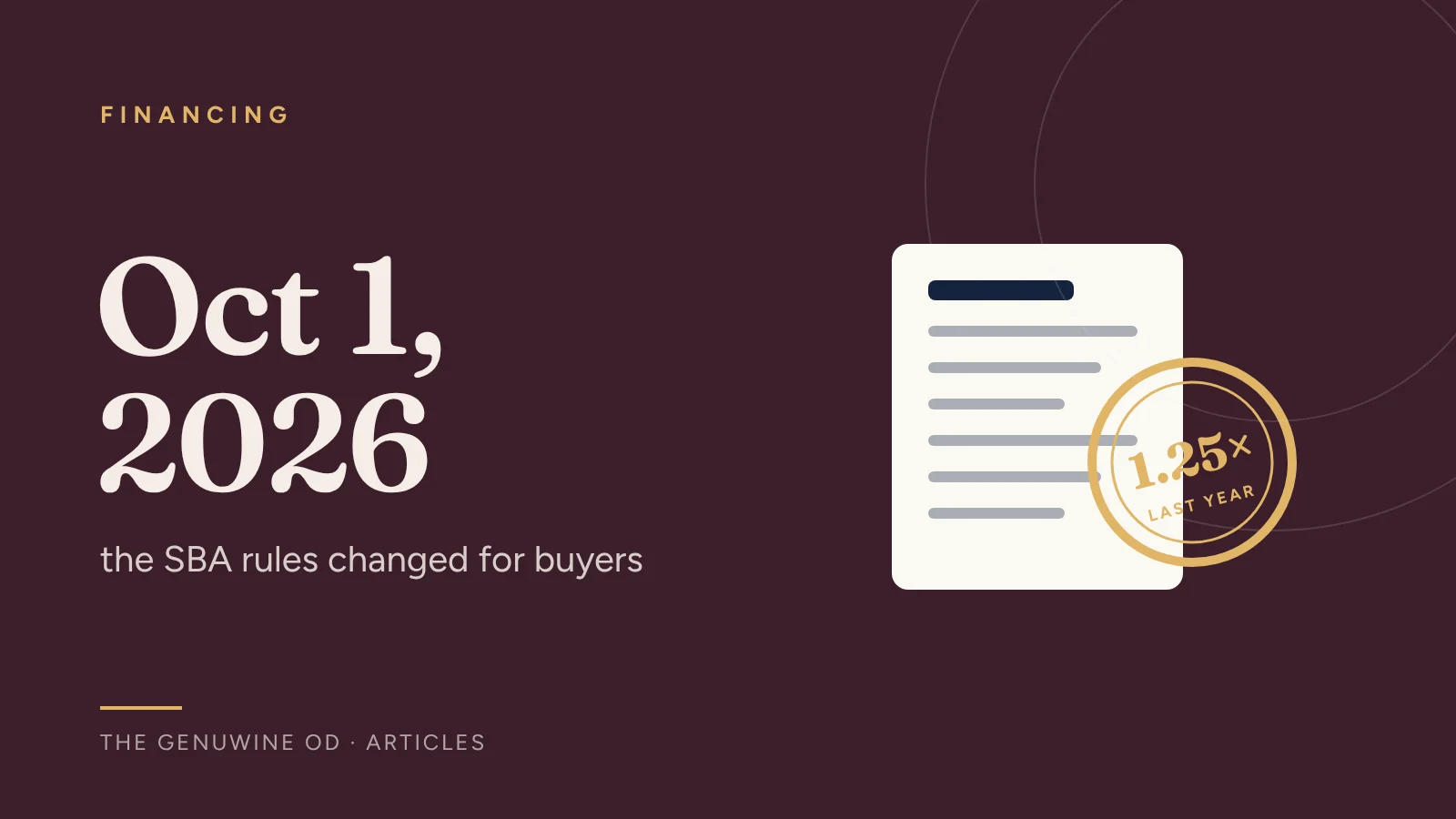
Using an SBA Loan to Buy an Optometry Practice: The October 2026 Rules
How SBA 7(a) loans work for buying an optometry practice under the rules effective October 1, 2026: last year's cash flow, 1.25x coverage, 10% equity, seller notes.
Optometry Practice Loans: How Lenders Decide (US and Canada)
What lenders check before they fund an optometry practice: debt coverage, your own cash, your lowest cash month, and how US and Canadian loans differ.